Climate Change Has Visibly Accelerated
The New York Times
000000000000000000000000000000000000000000
Theosophy is largely about planetary
questions, and so is the moment our
humanity lives now. The reader of “The
Secret Doctrine” faces complex teachings
on the evolution of our planet ; and in the
21st century newspaper readers face equally
deep issues regarding the life of our planet.
It is an interesting task, then, to compare the
planetary philosophy in “The Secret Doctrine”
to facts as the ones discussed in the two
following articles from “The New York Times”.
The reader is invited to read the article “Al
Gore, Theosophy and the Cycle”, in this section
of the www.filosofiaesoterica.com website.
(The Editors)
00000000000000000000000000000000000000000000
1. As Arctic Sea Ice Melts, Experts Expect New Low
The Associated Press
Published: “New York Times”, August 27, 2008
Source: http://www.nytimes.com/2008/08/28/science/earth/28seaice.html?ref=opinion
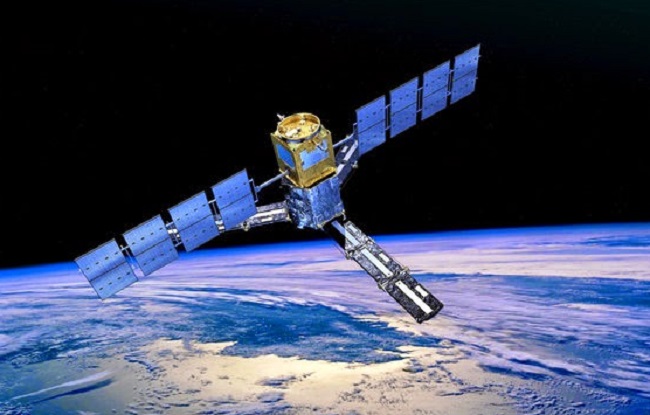
WASHINGTON (AP) -- The National Snow and Ice Data Center has reported that sea ice in the Arctic now covers about 2.03 million square miles. The lowest point since satellite measurements began in 1979 was 1.65 million square miles, last September.
With about three weeks left in the Arctic summer, this year could wind up breaking that record, scientists said.
Arctic ice always melts in summer and refreezes in winter. But over the years, more of the ice is lost to the sea with less of it recovered in winter. While ice reflects the sun's heat, the open ocean absorbs more heat, and the melting accelerates warming in other parts of the world.
Sea ice also serves as primary habitat for threatened polar bears.
“We could very well be in that quick slide downward in terms of passing a tipping point,” said Mark Serreze, a senior scientist at the data center, in Boulder, Colo. “It's tipping now. We're seeing it happen now.”
Five climate scientists, four of them specialists on the Arctic, told The Associated Press that it was fair to call what was happening in the Arctic a “tipping point.”
Last year was an unusual year when wind currents and other weather conditions coincided with global warming to worsen sea ice melt, Dr. Serreze said. Scientists wondered if last year was an unusual event or the start of a new and disturbing trend.
This year's results suggest the latter because the ice had recovered a bit more than usual thanks to a somewhat cooler winter, Dr. Serreze said. Then this month, when the melting rate usually slows, it sped up instead, he said.
The most recent ice retreat primarily reflects melt in the Chukchi Sea, off Alaska's northwest coast, and the East Siberian Sea, off the coast of eastern Russia, according to the center.
The Chukchi Sea is home to one of two populations of Alaska polar bears.
Federal observers flying for a whale survey on Aug. 16 spotted nine polar bears swimming in open ocean in the Chukchi. The bears were 15 to 65 miles off the Alaska shore. Some were swimming north, apparently trying to reach the polar ice edge, which on that day was 400 miles away.
Polar bears are powerful swimmers and have been recorded on swims of 100 miles, but the ordeal can leave them exhausted and susceptible to drowning.
And the melt in sea ice has kicked in another effect, long predicted, called “Arctic amplification,” Dr. Serreze said.
That is when the warming up north is increased in a feedback mechanism and the effects spill southward starting in autumn, Dr. Serreze said. Over the last few years, the bigger melt has meant more warm water that releases more heat into the air during fall cooling, making the atmosphere warmer than normal.
On top of that, researchers are investigating “alarming” reports in the last few days of the release of methane from long-frozen Arctic waters, possibly from the warming of the sea, said Bill Hare, a Greenpeace climate scientist, who was attending a climate conference in Ghana. Giant burps of methane, which is a potent greenhouse gas, is a long-feared effect of warming in the Arctic that would accelerate warming even more, according to scientists.
Over all, the picture of what is happening in the Arctic is getting worse, said Bob Corell, who headed a multinational scientific assessment of Arctic conditions a few years ago. “We're moving,” he said, “beyond a point of no return.”
0000000000000000000000000000000
2. Arctic in Retreat
An Editorial Article on Climate Change
The New York Times
Published: September 8, 2008.
Source: http://www.nytimes.com/2008/09/08/opinion/08mon2.html?_r=1&th&emc=th&oref=slogin
Climate change is changing all the rules in the Arctic. The polar ice cap is smaller by some 700,000 square miles than it was in the two decades before 2000. The annual melting of northern ice this year may well surpass last year's -- the furthest retreat of Arctic ice in a single year since it was first measured.
The Northwest Passage -- the route through the Arctic Ocean at the northern edge of the American continent -- is likely to be open and navigable again before summer's end for the second time in two years. And, according to new satellite images, the eastern sea ice blocking a northeastern passage above Siberia has melted too, turning the Arctic into an island surrounded by open water for the first time ever.
What was once solidly frozen is now, increasingly, accessible, leading to fierce disputes over territory and natural resources. Perhaps the biggest of these disputes is whom do the waters in the Northwest Passage belong to: Canada, or are they international?
Canada has already staked its claim, requiring foreign ships to report when entering waters within 200 miles of its northern shores. The previous limit was 100 miles. Canada is also backing a new search to find the Erebus and Terror -- Sir John Franklin's ships, which were lost during a 19th-century British expedition to the Arctic -- in order to “take ownership of the history of this place,” as one historian put it.
Meanwhile, the United States, Canada and Russia are all busily mapping the underwater continental shelf in order to bolster claims to what are believed to be vast mineral deposits, including oil and gas.
The two poles of this planet could hardly be more different. In the Antarctic, a scientific truce of sorts remains in effect. But the Arctic is increasingly a scene of commercial and territorial conflict.
The only tolerable way to shape the future of the Arctic is through international cooperation, not a sovereignty battle. There is more to protect than access to valuable resources and shortened shipping routes. There is a desperately endangered and fragile ecosystem as well, which is threatened both by global warming and by the commercial development warming allows.
00000000000000000000000000000000000000